
21. April 2026
Getting Behind the Label - France
France is a country with extensive winemaking history, and is credited with a lot of innovation in winemaking that we all take for granted.
The winemaking regions within France have developed somewhat independently, but they generally agree on one concept – where a wine has come from, the environmental and human factors that shaped that wine, is the most important thing. This concept is known as ‘terroir’: a wine’s ‘sense of place’, something which makes the wine unique on the world stage.
However, this results in a bottle label that only tells you where the wine was made and its alcohol content – so how are you supposed to know what you’re buying?!
The Appellation System
French wine regions all have legal classifications associated with them under EU law, Protected Designations of Origin (‘PDOs’), which aim to ensure consistent quality. It is exactly the same concept that applies to food across much of Europe: Cornish Clotted Cream, for example, must be made from milk produced in Cornwall and must be made in a specific way. A producer can’t use this label unless they can prove they meet all the requirements.
In France, the classification is AOC / AOP (Appellation d’Origine Contrôlée/Protégée) and sometimes referred to as the Appellation System. The label will usually include the appellation name instead of the "d'Origine", e.g., Appellation Sancerre Contrôlée.
Each major wine region in France has its own appellations that determine:
- Which grapes can be used in the wine;
- Where the grapes must be grown; and
- How the wine must be made.
Often the appellation rules prevent winemakers from putting additives (e.g., preservatives) in the wine and may impose restrictions on how the grapes are grown (e.g., use of pesticides), or what proportion of the grapes making the wine need to be of a particular variety. Collectively, these rules ensure that wines from the same region retains that ‘sense of place’, which starts to make things easier if you can remember the wine regions that you like.
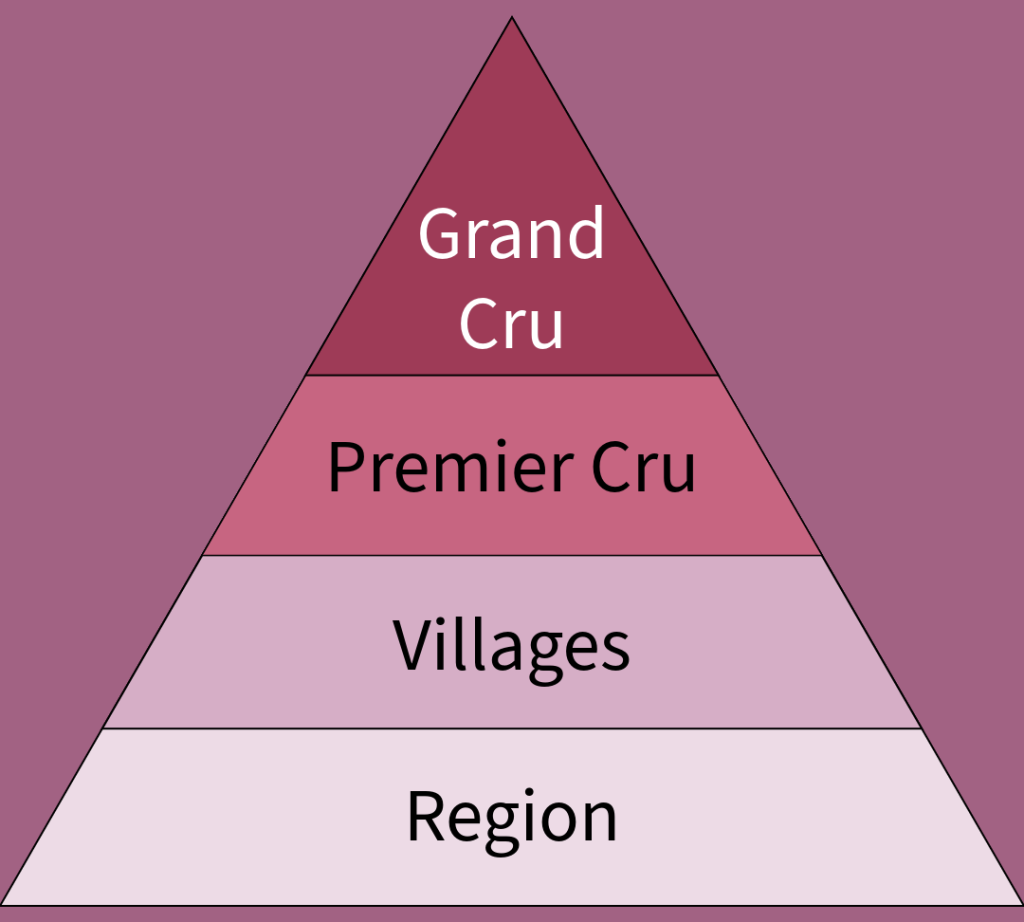
There is a hierarchy of quality (and price) in this system, starting from generic regional appellation (e.g., Bourgogne), becoming more specific with the town/village (e.g., Beaune), and down to specific vineyards with “Premier Cru” or "1er Cru" (literally “first growth”) and “Grand Cru” (literally "great growth”). This doesn't apply to every region in France (of course!) but does crop up in some form in most major regions.
Entry-level wines will usually be labelled Indication Géographique Protégée (IGP) or Vin de Pays (VdP) and aren't bound by such strict rules. You might even see a grape on the label!
How is this helpful?
If you’re used to seeing grape varieties on a bottle (and have learned which of those you like) it can be daunting to have very little information on the label! Newer wine regions tend to give you more detail to help you: knowing that you have enjoyed a Chardonnay in the past might guide to pick out your next bottle.
The only trouble there is knowing that a wine is made from Chardonnay doesn’t necessarily tell you what style of wine you will be drinking. If it’s from a cool climate and produced in stainless steel tanks, it might be light, lemony and mineral; if it’s from a warmer climate and has been aged in oak barrels it could be full-bodied and have flavours of tropical fruit, buttered toast and coconut.
Think of it like a menu in a super fancy restaurant. One where the menu is full of dishes that just list the ingredients, but give no indication as to how they have been prepared. “Beef, potato, onion” could be an ingredient list for a massaman curry, but also for a cottage pie!
The French wine system is the opposite. You’re ordering off a menu where you have a list of dishes but no idea of the ingredients. You might see unfamiliar words on that menu, but if you’ve tried a Bouillabaisse once you’d have a good idea of what to expect the next time you see this French fish stew on a menu. In this case, the name of the dish is much more specific and immediately conjures up expectation of flavour and texture; you don’t need to see a list of ingredients.
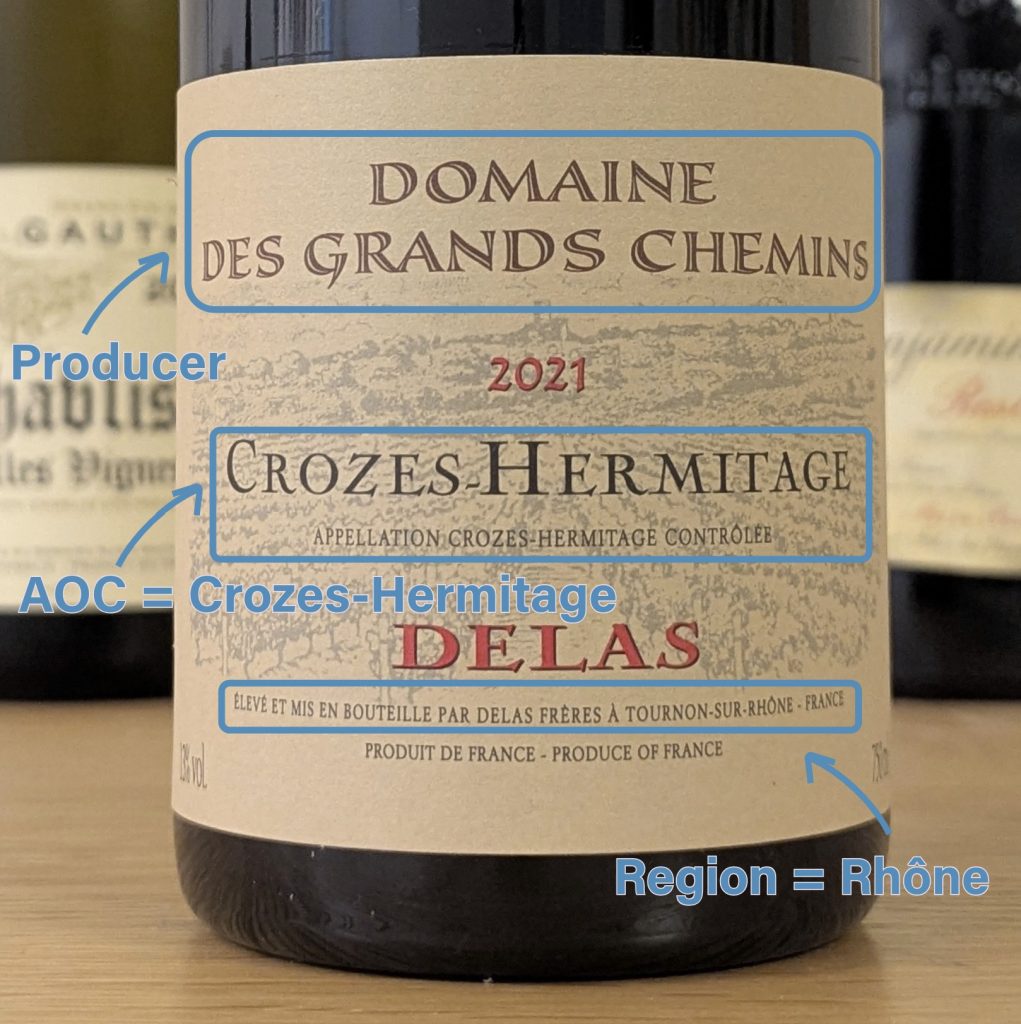
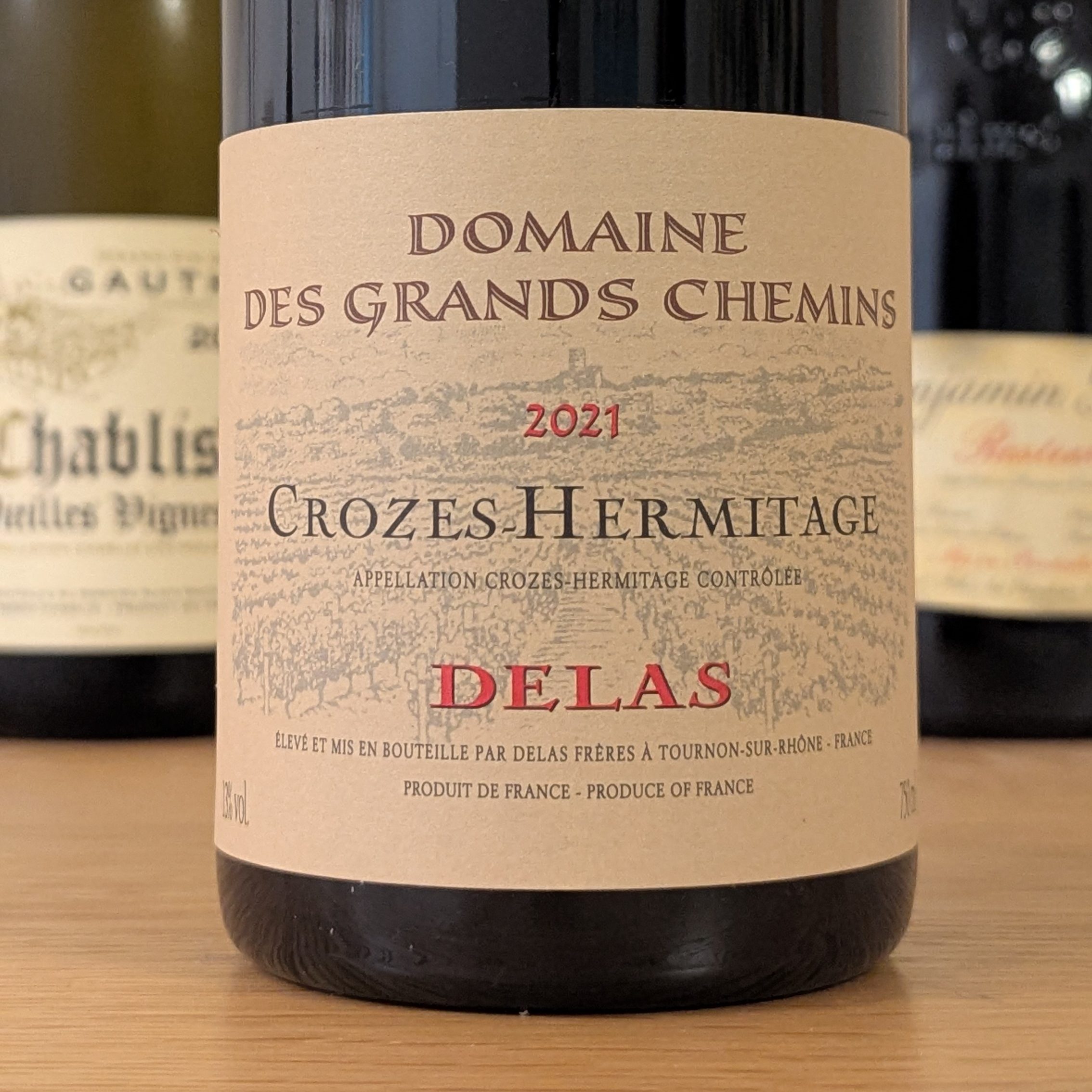
In the photo above, you're told this red wine is produced somewhere in the Rhône Valley. The AOC tells you it is from a place called Crozes-Hermitage. This is a "villages" level appellation, step two in the appellation pyramid, referring to a small area within the Rhône - more specific than Côtes-du-Rhône (the generic regional appellation). This wine could be different to other Côtes-du-Rhône red wines, but chances are that it will be pretty similar to other Crozes-Hermitage red wines. Look for the Appellation [REGION] Contrôlée/Protégée label!
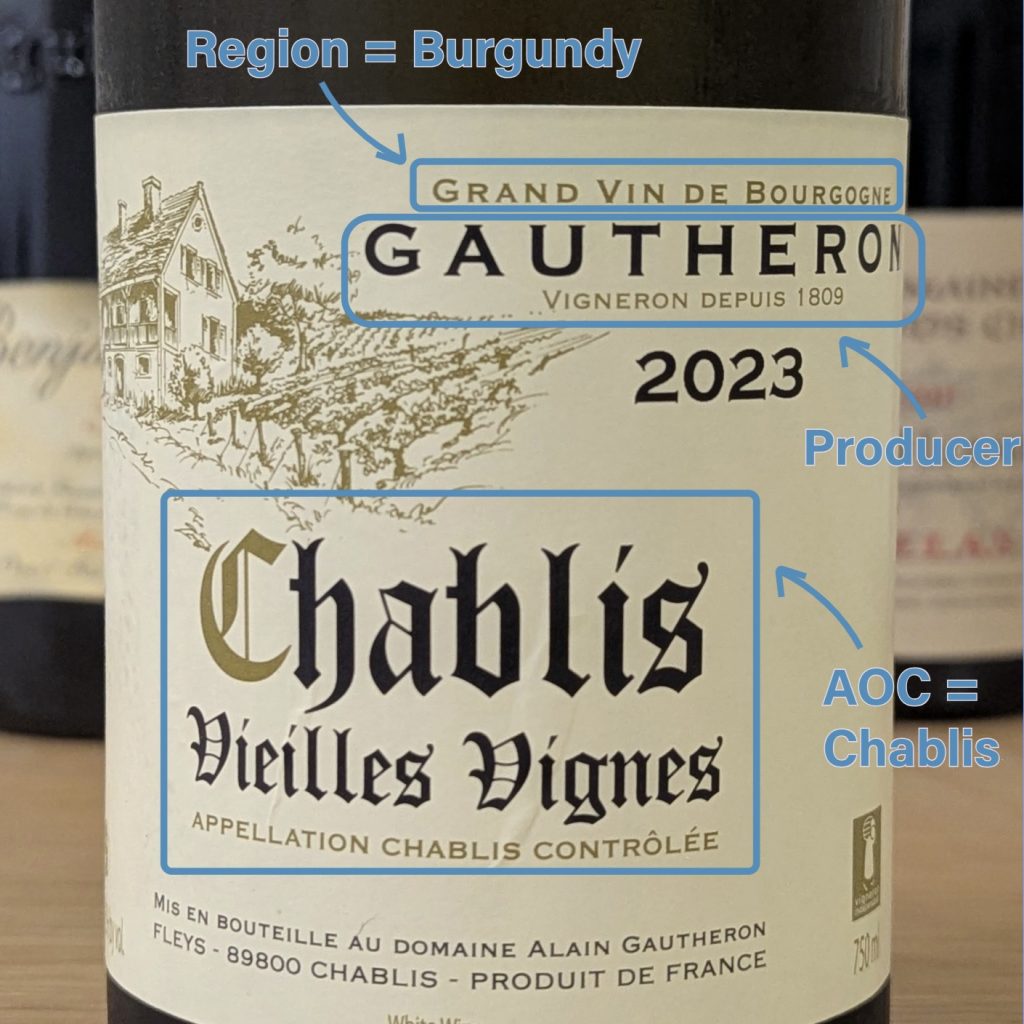
Similarly with this white wine, you can tell it comes from the Chablis appellation within the Burgundy region (again, more specific than "Appellation Bourgogne Contrôlée" generic region appellation). If you see this, you can almost guarantee a crisp, unoaked style of white - even if you can't remember that it's a Chardonnay grape hiding behind the label!
It’s impossible to learn all of the regions, but once you a find a French appellation you love, it’s then easier to reliably pick up that same style (even if from a different producer). Equally if you give this information to the sommelier at a restaurant, they'll really be able to tailor their wine recommendations.
Where should I start?
Most wine regions in France have their ‘hero’ red and white grapes that define the style of wine that they produce. The image below is a quick ‘cheat sheet’ for what to expect from each region. This is by no means a definitive guide as there is huge variety across sub-regions and producers, but designed to kick off your French wine journey!
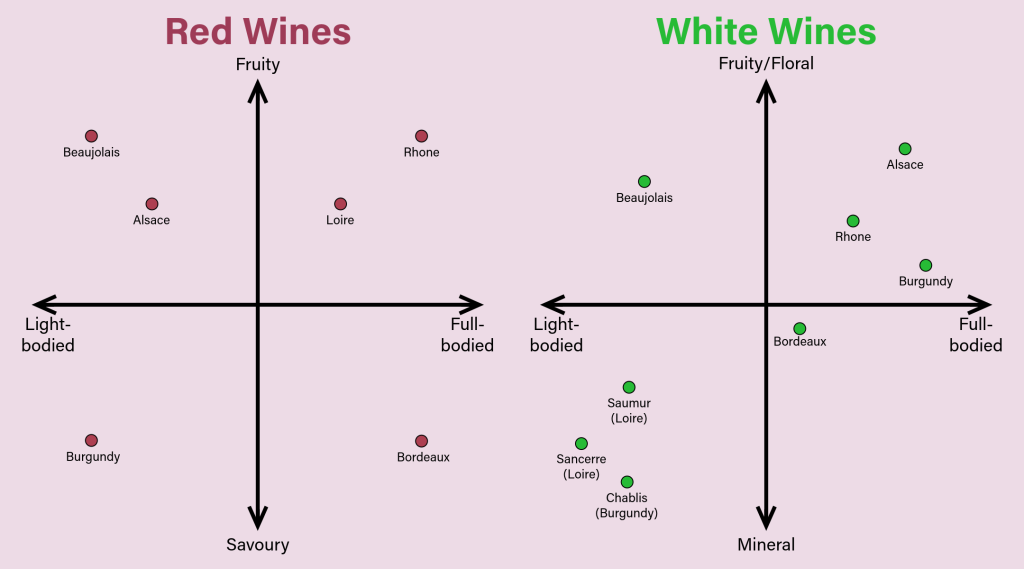
- Alsace makes elegant, rich, and sometimes sweet, white wines from aromatic grape varieties like Pinot Gris and Gewürztraminer. Its red wines tend to be lighter, often from Pinot Noir.
- Bordeaux is most famous for its red wines (‘claret’) which are rich, earthy and oaked, mostly blends of Cabernet Sauvignon and Merlot. White wines produced here are usually oaked and complex.
- Burgundy (Bourgogne in French) is most known for lighter bodied red wines (made from Pinot Noir) and complex, oaked white wines (made from Chardonnay). However, Burgundy contains the region of Chablis which produces a fresh and mineral style of Chardonnay.
- The Loire typically produces more delicate fresh, floral white wines and floral, light red wines. Sancerre and Pouilly-Fumé (both famous for Sauvignon Blanc) are two of the most famous regions. Saumur wines are still mineral and fresh but slightly fruitier (made from Chenin Blanc).
- The Rhône is split into two parts. The north produces intense peppery and spicy styles of Syrah (Shiraz) such as Crozes-Hermitage, but the south is more famous for its red blends (mostly Grenache, Syrah and Mourvèdre) – by far the best known is the region of Châteauneuf-du-Pape. Its white wines are equally diverse, mostly fruity and floral, but some very intense and complex styles of Viognier are produced in the north. The regional appellation of “Côtes-du-Rhône” produces excellent value easy-drinking wine!
- Champagne is known for traditional method sparkling wines made from Chardonnay, Pinot Noir and Pinot Meunier.
- Provence is most famous for making very pale rosé wine, most commonly made from Cinsault grapes.
It doesn't end here...
France is such an interesting wine producing country with a huge variety of styles across so many historic wine regions - each of which could have its own knowledge article!
Keep your eyes peeled for other articles in the series to guide you through the complexities of Old World wine.