Wine Tasting 101
"This might be a stupid question, but when you're asked to try wine in a restaurant... what am I looking for?"
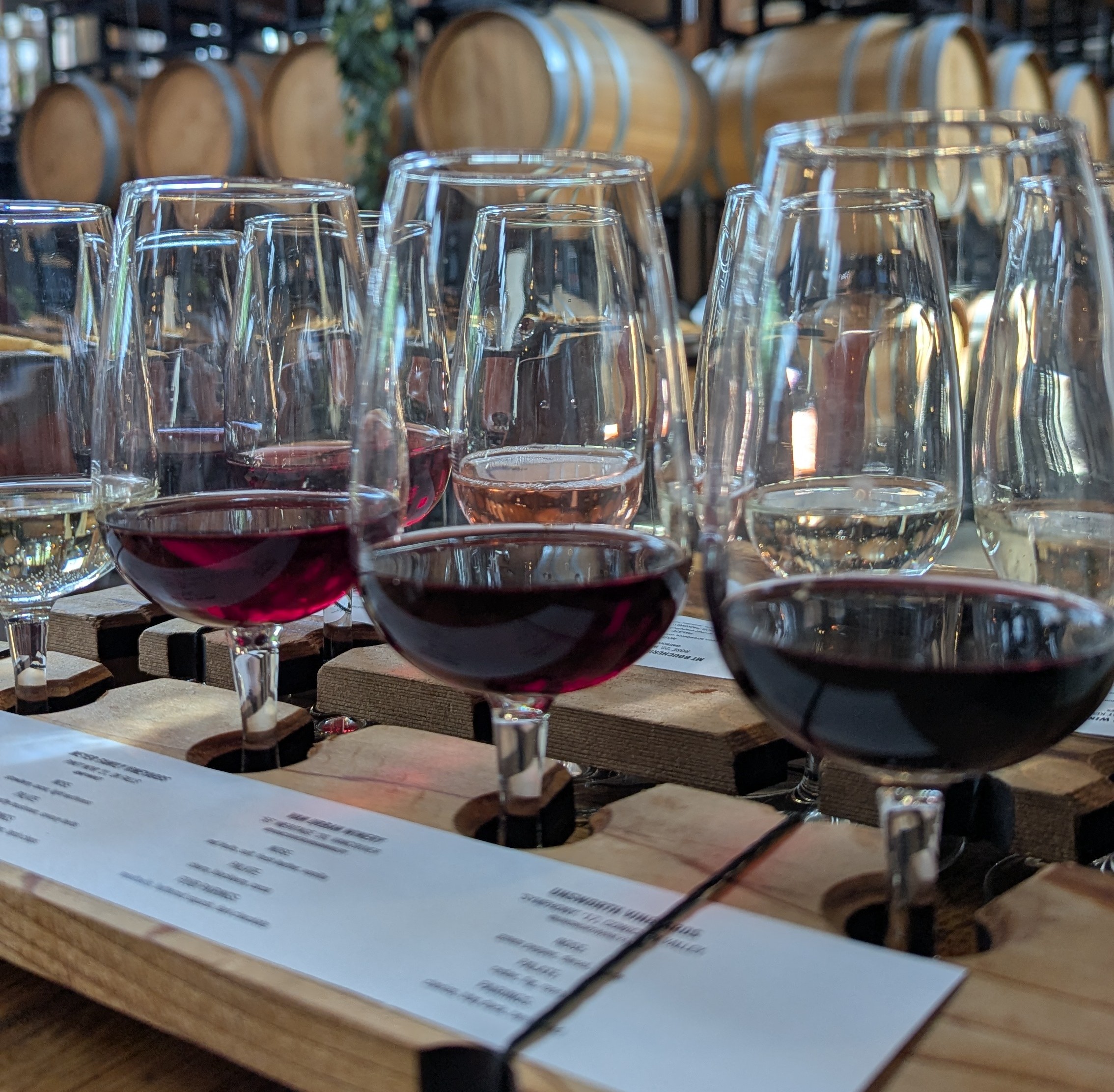
"To see if you like it," the vineyard owner declared. I winced. Not at the question, which was far from stupid, but at the answer. I was on a wine tasting tour in Victoria, British Columbia, and an American tourist had just asked the question so many are scared to - because they feel they should already know the answer.
Wine tasting undoubtedly has a snobbery factor associated with it, conjuring images of dark walnut panelled rooms and people throwing around distasteful words like 'unctuous' and 'flabby'. However, you don't need a club membership or velvet smoking jacket to get involved!
The real challenge with learning how to taste wine is having the right words to describe what you're tasting; luckily, this comes with practice! Wine professionals are taught a 'standard' set of descriptors so that we have a consistent approach to writing tasting notes, but the only important thing is noting what will help remind you personally what you liked about the wine (so that by the end of a tasting evening you can still remember what you tried).
In this guide I'll walk you through how to approach wine tasting and some tips on what to look out for.
But first...why are you asked to 'try' the wine in a restaurant?
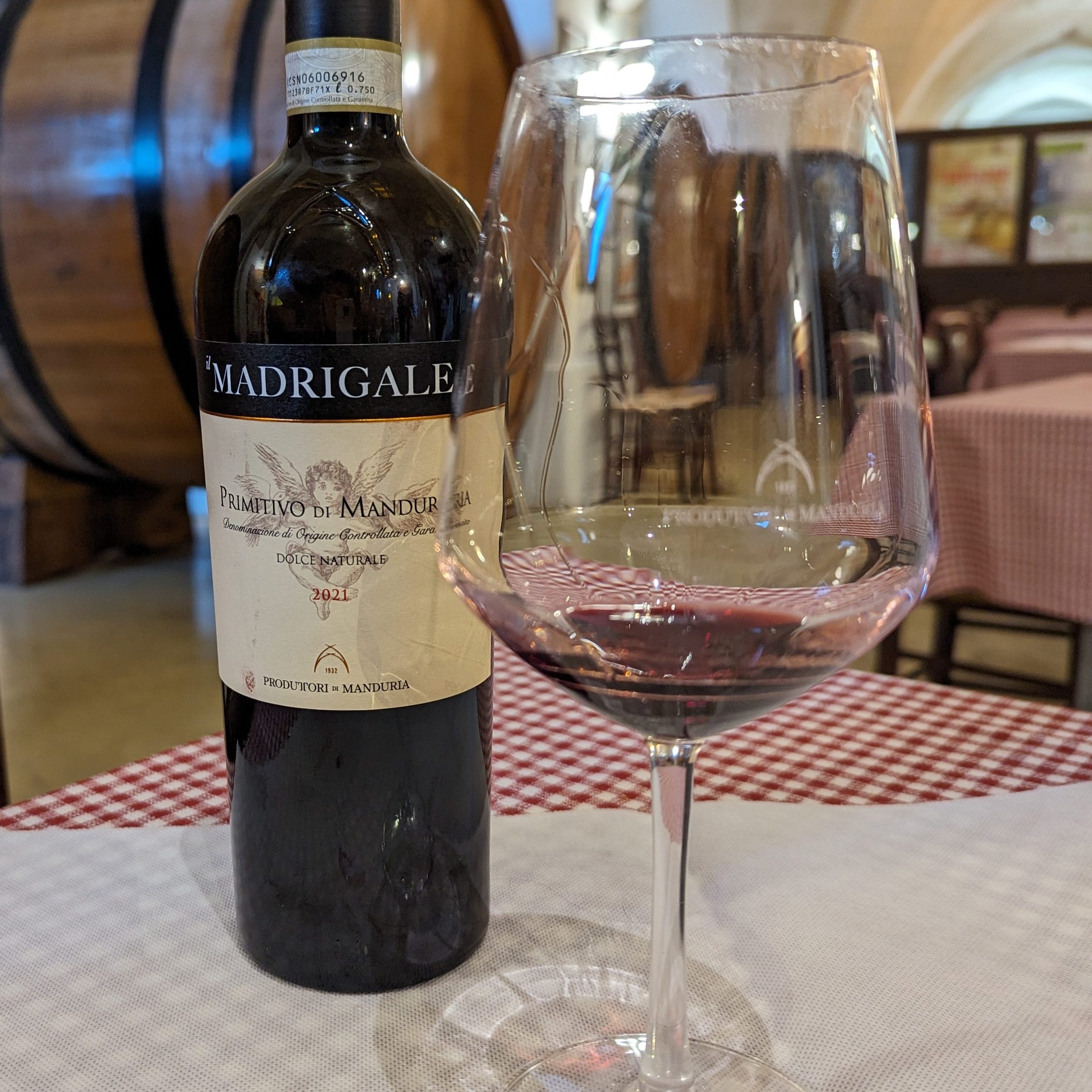
It is a common misconception that, as the Canadian vineyard owner so confidently told us, they are checking you like it. By the time the bottle has been opened for you, it is unlikely that your host will take it back just because it's not to your taste. I often wonder how much trouble this mistake has since caused that American tourist...
What they are asking of you is whether there is a fault with your wine - most commonly checking that a wine has not become 'corked'. This is where the wine is not properly sealed and air has got into the bottle, meaning the wine oxidises and smells like a soggy cardboard box. If you have ever smelt a corked wine, it is not a smell that you'd forget!
This act is an odd phenomenon in hospitality that is unique to wine. It would be rather strange for the chef to pop out of the kitchen and ask you to check that the chicken isn't past its best! So why does this happen with wine? There are differing opinions on the subject, but the common answer is tradition. In recent history, it would have been more common for the wealthy elite to be purchasing wine (mead or gin being more the drink of the masses) and those individuals would likely know exactly what they were looking for. Originally it may have been lifted from ancient hospitality customs - perhaps proving to your guests that you aren't trying to poison them!
How to taste wine like a pro
When we taste wine, we follow these steps:
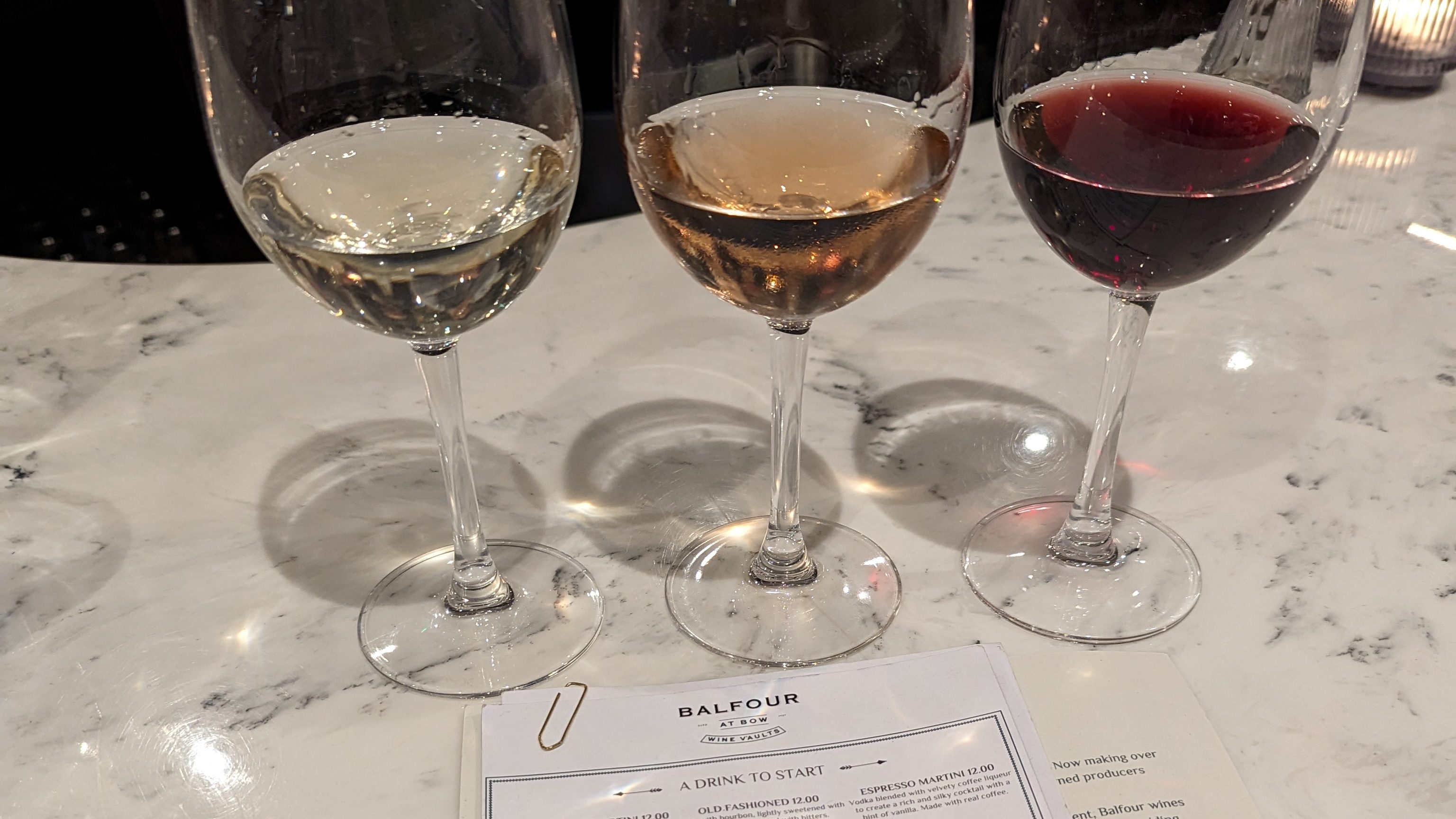
- Appearance - tilt the glass against a plain white background like a piece of paper, then look at both the colour and intensity. Not a vital step, but useful for side-by-side comparions.
- Aroma - swirl the wine around the glass to wake it up, then stick your nose in and see what you can smell!
- Palate - take a sip and let it sit in your mouth briefly while you think about what you taste. The first sip gives you an impression of texture, but your second sip is where you really start to identify flavours.
1. Appearance
Before we get stuck in, we pause to take a look at what's in our glass. We are looking for colour (e.g., brick red, golden, salmon pink) and depth of colour or intensity (how transparent/opaque the wine is). This won't tell us much in isolation, as colour is driven by many factors, but it does let us compare similar wines and give us some clues as to grape and winemaking style.
Colour tends to change as a wine gets older, so if you're comparing a 2020 vintage to a 2010 vintage wine from the same producer, you would see quite a difference.
- Red wines tend to move from brighter reds (sometimes even with a blue/purplish tinge) through to duller shades with brownish tinges to them.
- White wines will turn golden or even brown with age, though this will also be influenced heavily by how a wine is stored: oak ageing can also turn a white wine a deeper yellow or golden colour.

This colour spectrum isn't just linked to age. Nebbiolo grapes (famously found in the wines of Barolo) produce wines with a brownish tinge even when young, and a young Chardonnay might be a golden colour because it spent a few months in a barrel. Most red wines will fall between ruby and garnet, and most whites will be somewhere between lemon and butter yellow.
Most modern rosé wines are described as pink, though these can be more salmon-coloured or orange-tinged depending on the style.
Intensity is usually described simply as 'pale', 'deep' or somewhere in between ('medium'). Again, this is often driven by the grape variety, but in two otherwise identical wines it could tell you which is older (reds get paler with age) or how it has been made (whites fermented or stored in oak will typically be deeper in colour).
2. Aroma
We start by giving the wine a careful swirl around the glass to let the wine breathe and release its aromas. Ideally we are using a small tasting glass (see photo below) which has inward-sloping sides to focus all those aromas straight into your nose.
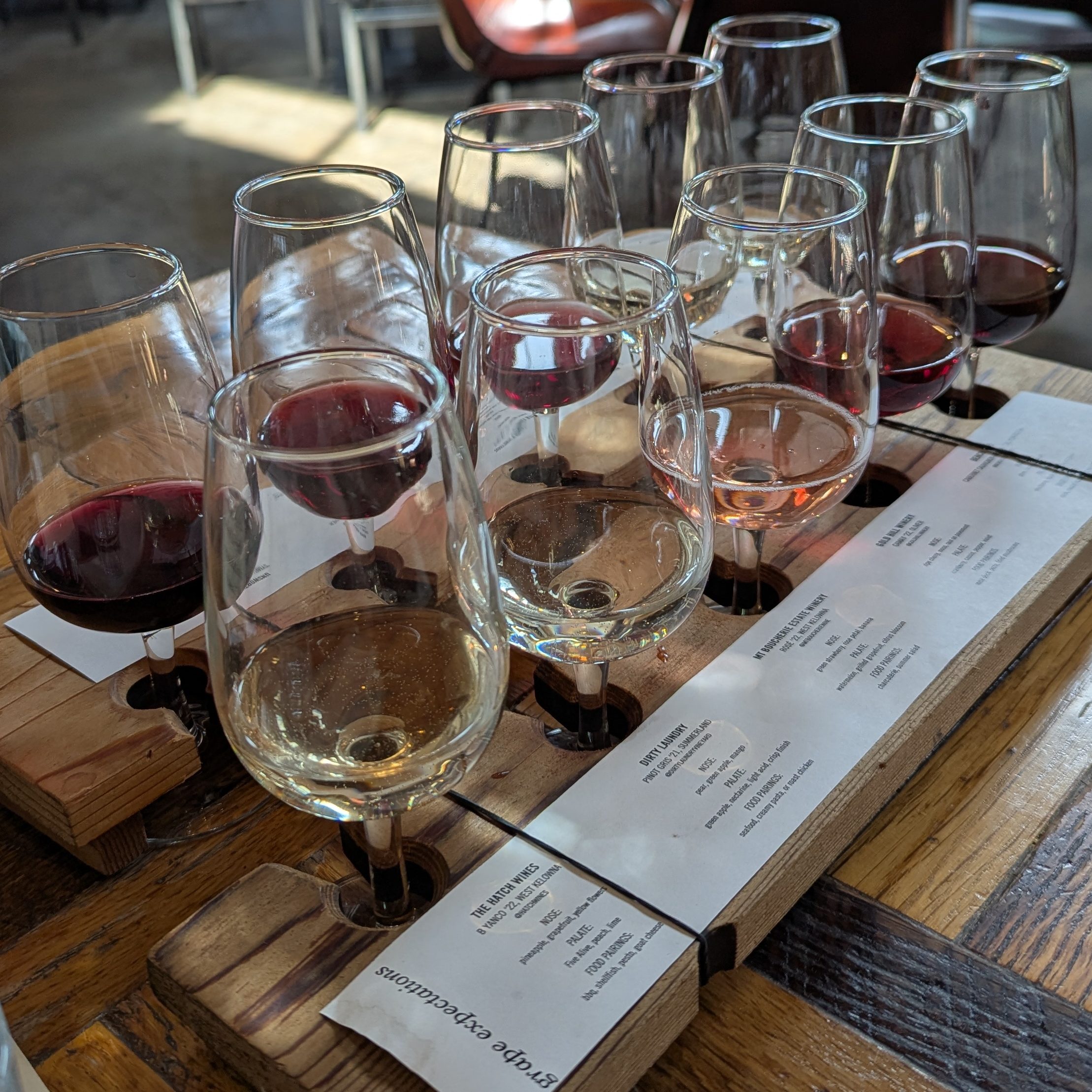
Here is where we can start to get creative! Wine professionals have a list of common descriptors for wine which can be helpful to learn, but this is all about what resonates for you and will help you remember the wine. One of things that I love about wine is the sheer diversity of aroma compounds that grapes can produce, and bizarrely there are very few wines that actually smell like grapes.
When smelling wine, I run through a few categories in my head. Can I smell fruit? If so, is it more delicate like apple or citrus, or more punchy like pineapple, lychee or mango? What about herbs or spices, cream and pastry, or even something earthy or mineral?
It is much easier to run through a list of what you might be able to smell, and compare each to what's in your glass, than try to think from scratch. That said, gut feel is often the best approach - the point of writing tasting notes is to trigger your memory, so if "mum's key lime pie" or "potpourri" does that for you then go for it!
Formally, we split aromas into three categories: Primary (arising from the grape & its growing conditions), Secondary (produced from winemaking) and Tertiary (coming from bottle age).
Primary
Primary aromas give you a clue to the grapes in your bottle and where they might have been grown. These tend to include fruit, fresh herbs, pepper and floral characters and are influenced by a lot of factors, including grape variety, climate and vineyard soil.
The same grape variety can have very different primary aromas depending on the climate it is grown in. Chardonnay grown in a cool region like Chablis in France will have primary aromas like green apple, lemon and grass; a Chardonnay grown in a warmer region like Central Australia could have more of a tropical fruit character.
Equally, a Riesling grown on slate-rich soil will taste quite different to Riesling grown on sandy soil, even from the same region and producer. This is where the concept of 'terroir', or 'sense of place', comes from - more on this in future articles!
Secondary
Secondary aromas indicate what the winemaker has done in the winery to influence the end product. If the wine has spent some time in a barrel, you might expect to smell baking spice, woodsmoke, or vanilla. A pastry, bread or yeasty smell might tell you that the winemaker has left the wine in contact with the yeast cells. Finally, you might detect butter, cream or milk, which would indicate a process called malolactic conversion - this softens the acid in wine and makes it more creamy in texture.
Tertiary
Corks and screwcaps are not perfectly air-tight, which means that wine left in a bottle will slowly oxidise and 'age', changing its aroma and flavour profile.
Not all wines age well - in fact, the vast majority of wines are released ready-to-drink and not fit for ageing. In good examples, you might smell aromas like meat, leather, tobacco, earth and mushroom in an aged red wine, or honey, nut, caramel and ginger in an aged white.
3. Palate
This is the fun part - getting to taste the wine! Here we are looking for both structure (how the wine feels) and the flavours we can pick out.
Structure, or 'Body'
With the first sip we're looking to let this sit in your mouth for a few seconds to get a 'feel' for the wine. Swilling the wine, making sure it comes into contact with all parts of your mouth, really helps you feel the different components of the wine which come to light in different areas of your mouth.
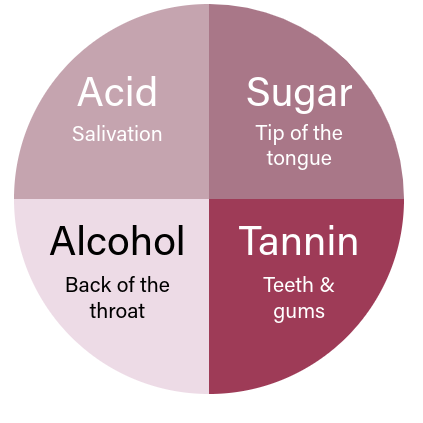
Sugar is fairly self-explanatory, although it is very difficult to separate sugar level from the flavours in the wine. For example, a warm climate Chenin Blanc can taste like candied pineapple and mango but be technically 'dry' (low sugar), whereas a very acidic Riesling can be technically 'off-dry' (slightly sweet) but taste like lime juice. The best test for sweetness is on the tip of your tongue - sugar adds a certain texture to wine - but this element is tricky and requires a lot of practice to identify.
Acid is present in all wines and is evident by how much the wine makes you salivate. You'll feel this mostly on the insides of your cheeks, and the best test of a wine's acidity level is to swallow your sip, look down and open your mouth - high acidity wines will have you practically drooling!
Tannin is the descriptor for the drying, and sometimes bitter, sensation in red wines (and orange wines). You feel this most around your gums and teeth, particularly if you run your tongue behind your lower lip. Tannin comes primarily from the grapes' skin and gives red wine much of its texture.
Alcohol is best felt as a warming sensation at the back of your throat. Again this can be difficult to identify, as an intense fruit flavour or slight sweetness can soften the feel of the alcohol. It's actually easier to tell how alcoholic a wine is if you're spitting out (spittooning) your wine, as you feel the alcohol burn without the buzz!
Flavour
Having determined the wine's structure, the second sip is where we're looking at flavours. This is a good opportunity to revisit the aromas you picked out in step 2, and see if anything else jumps out at you. I personally find it easier to pick out floral and fruit characters (primary) through the aroma, and earthy, meaty and spice characters (secondary and tertiary) through taste.
How does this help me?
There's no need to remember all of this, but there are two takeaways here. First, I'm a firm believer in the concept of taking the time to think about what's in your glass. People often ask me if learning about wine has made me more "fussy", or "snobby" - but I have found the opposite! Engaging more of your senses can elevate the whole wine drinking experience and I've learnt to appreciate all types of wine more.
Secondly, and most importantly, it can help you start to identify what you like - and why. If you can identify the flavours, aromas and structural elements that you like in a wine, it's easier to guide your waiter or local wine shop owner towards recommending you that perfect bottle!